2026-11-06
Two food packaging film rolls can share the same micron count and still behave very differently on a thermoforming or flow-wrap machine. The difference usually comes down to resin composition rather than gauge. A common structure for fresh meat and poultry pairs a nylon (PA) layer for puncture resistance with a polyethylene (PE) sealing layer for low-temperature performance. The PA side handles the sharp edges of bones or frozen product, while the PE side does the actual sealing.
If your supplier quotes only thickness and width, ask for the layer breakdown. That single conversation often reveals whether the roll was designed for your application or for a generic specification. It also tells you whether the supplier controls extrusion in-house or sources finished rolls from a third party, which affects how quickly they can adjust a structure when your product changes.
Not every food product requires the same oxygen or moisture protection. A bakery item and a retort-ready meal have little in common when it comes to film demands. High-barrier structures often incorporate EVOH or metallized layers to limit oxygen transmission, which matters for products prone to oxidation or color loss. Medium-barrier PA/PE rolls, on the other hand, are often sufficient for chilled distribution where the primary concern is mechanical durability rather than long shelf stability.
Buyers who specify excessive barrier for a short shelf-life product pay for performance they do not need. Those who under-specify barrier for a sensitive product risk spoilage complaints downstream. The useful starting point is the product’s actual shelf-life target and distribution temperature, not a competitor’s film structure.
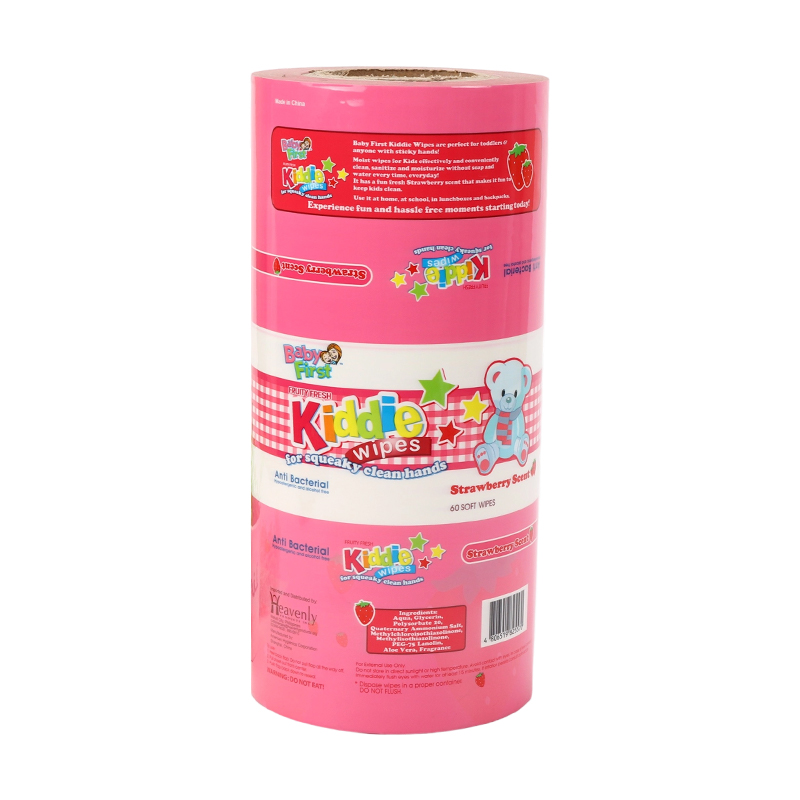
A food packaging film roll is not a finished product until it runs through your machine. Winding tension, core diameter, and roll diameter consistency influence how smoothly the film unwinds at speed. Rolls wound too loosely can telescope during acceleration; rolls wound too tightly can block or wrinkle at the forming station. For thermoforming applications, thickness tolerances across the roll width matter because uneven gauges lead to uneven heating and inconsistent pocket depth.
When evaluating a new food packaging film roll supplier, request roll samples from the same production batch and run them under your normal line speed. A roll that performs well at low speed but fails at production speed tells you something the spec sheet cannot. Ask also how the supplier measures winding tension and whether that data is recorded per roll.
For retail-facing packs, film clarity and surface consistency affect how the product looks under store lighting. Haze and gloss variations often trace back to cooling and casting control during extrusion. A food packaging film roll intended for printed applications also needs consistent surface energy for ink adhesion, whether the converter is running solvent-based or water-based inks.
Buyers sourcing printed rolls or planning to print in-house should confirm treatment levels and treatment consistency across the roll width. A roll that prints well at the start of a run but fades toward the core suggests inconsistent corona treatment, which is a process control issue rather than an ink problem. Requesting a treatment-level record per batch makes this easier to verify.
Recommended Products
CONTACT US
Add: Rooms 101 and 102, Building 16, Longcheng Micro-Entrepreneurship Park, Longgang City, Wenzhou City, Zhejiang Province, China
TEL: +86-13395775085
E-mail: [email protected] / [email protected]
KEEP In Touch


 English
 русский
 Español