2026-07-03
Packaging has become an important part of product presentation, helping consumers quickly recognize products while giving manufacturers more space for branding and product information. Among the many labeling options available today, the Hand Sanitizer Shrink Film Label has become a popular solution for bottles of different sizes and shapes. Its ability to conform closely to curved containers creates a clean appearance while supporting attractive package design.
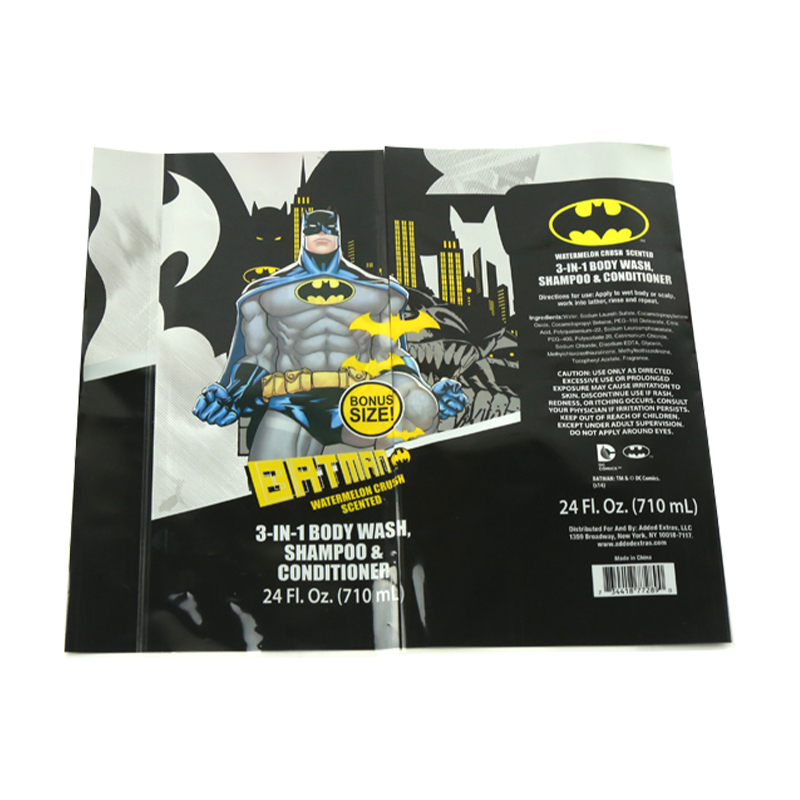
Unlike traditional adhesive labels that cover only part of a bottle, a Hand Sanitizer Shrink Film Label can wrap around a much larger portion of the container. This creates additional space for graphics, product descriptions, usage instructions, branding elements, and decorative patterns.
Designers can use continuous artwork across the entire bottle surface without interruption from label edges. Bright colors, gradient effects, transparent windows, and metallic finishes can all be incorporated into the printed design, giving packaging greater visual impact on retail shelves.
This expanded printable area also allows manufacturers to create distinctive bottle appearances for different product series while maintaining consistent brand identity.
One reason the Hand Sanitizer Shrink Film Label is widely used is its ability to adapt to containers with unique contours. Round bottles, oval bottles, square containers, and ergonomic hand-shaped designs can all accommodate shrink sleeve labeling.
Common film materials include PETG, PVC, OPS, and other shrinkable films selected according to packaging requirements. Each material offers different shrink characteristics, clarity, and printing performance, allowing manufacturers to match label material with container design.
After heat is applied during the shrinking process, the label conforms closely to the bottle surface, creating a smooth and integrated appearance.
Modern printing equipment allows a Hand Sanitizer Shrink Film Label to display detailed graphics and consistent color reproduction.
Flexographic printing is commonly selected for large production volumes because it supports efficient operation and stable print quality. Gravure printing is frequently used when designs include detailed images, smooth gradients, or vibrant color transitions. Digital printing provides flexibility for smaller production batches or customized packaging projects.
Advanced color management systems help maintain consistent visual appearance across multiple production runs, allowing products to retain a uniform shelf presentation.
Producing a Hand Sanitizer Shrink Film Label involves several carefully coordinated manufacturing stages.
The process typically begins with film preparation, followed by graphic design processing and high-resolution printing. After printing, protective coatings or decorative finishes may be added depending on the packaging design.
The printed film is then formed into sleeves using precision seam welding equipment. Accurate cutting systems produce labels according to specified dimensions before they are packed for shipment.
During bottle filling operations, automated sleeving machines position each label over the container. Heat tunnels apply controlled temperature, allowing the film to shrink evenly around the bottle while maintaining graphic alignment.
Quality inspections throughout production verify print registration, seam integrity, sleeve dimensions, shrink performance, and overall appearance before products move to packaging.
Packaging manufacturers, printing companies, cosmetic brands, personal care product suppliers, and contract filling facilities continue to expand their use of shrink sleeve technology. The Hand Sanitizer Shrink Film Label offers a combination of attractive graphics, adaptable materials, and efficient production that fits a wide variety of packaging projects.
As product packaging continues to emphasize visual appeal and practical functionality, shrink film labels remain an important choice for bottle decoration. Their compatibility with diverse container shapes, advanced printing methods, and automated production systems allows manufacturers to create distinctive packaging that supports product recognition while maintaining efficient manufacturing and filling operations.
Recommended Products
CONTACT US
Add: Rooms 101 and 102, Building 16, Longcheng Micro-Entrepreneurship Park, Longgang City, Wenzhou City, Zhejiang Province, China
TEL: +86-13395775085
E-mail: [email protected] / [email protected]
KEEP In Touch


 English
 русский
 Español