2026-08-07
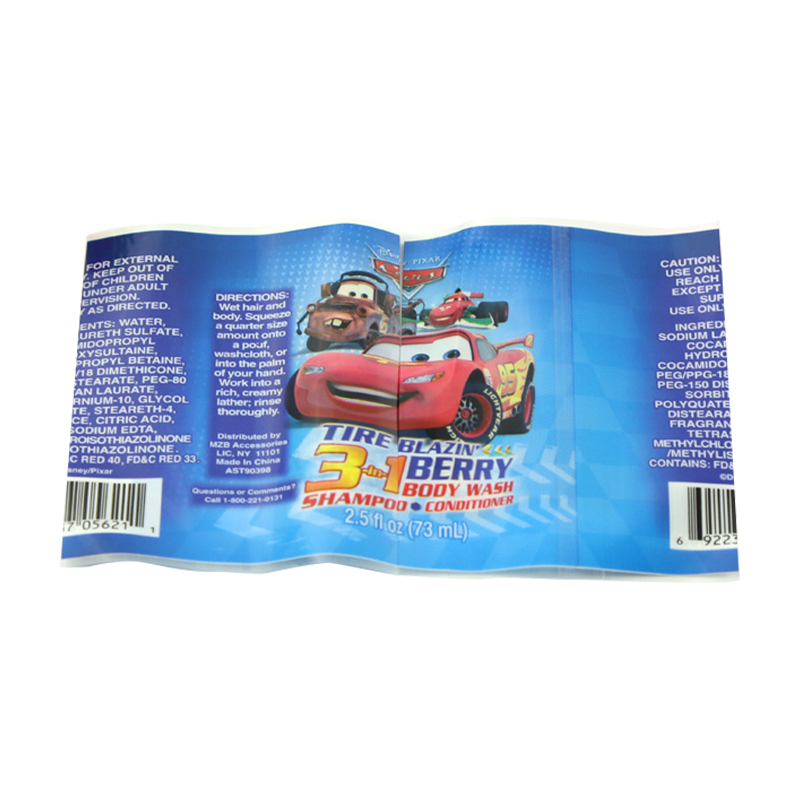
Pick up a beverage bottle with a label that wraps completely around its curves, tapers, and cap, and there's a good chance you're holding an example of shrink film labels at work. Unlike a flat adhesive sticker applied to one surface, this labeling method uses a printed plastic sleeve that shrinks tightly around a container when heat is applied, molding itself to whatever shape it meets.
The film itself starts as a flat, printed tube or sheet made from materials like PVC, PETG, or OPS. Before heat is applied, it's loose enough to slide over a bottle or container with some room to spare. That loose fit is intentional — it's what allows the film to conform to irregular shapes once shrinking begins.
When the labeled container passes through a heat tunnel, typically using steam or hot air, the film contracts uniformly in response to temperature. As it shrinks, it pulls tight against the container's surface, following contours that a flat label simply couldn't reach — a shoulder that narrows, a base that flares out, or a cap that sits above the main body. The graphics printed on the film distort proportionally during this process, so the artwork is designed in advance to account for that stretch and settle correctly once the shrinking is complete.
Because the film wraps the entire container rather than a single flat panel, it's often chosen for products where shape or coverage matters. Common applications include:
This range of use cases is part of why the method shows up across food and beverage, household goods, and personal care packaging lines, where container shapes vary widely between product lines.
Before shrinking happens, the film goes through a printing stage — usually gravure, flexographic, or digital printing, depending on run size and the level of detail in the design. Because the graphics will distort during shrinking, artwork files are prepared with that distortion factored in, often using specialized software that previews how flat art will look once wrapped and shrunk onto a specific container shape.
Buyers working with converters or manufacturers on this kind of labeling typically go through a few coordinated steps:
Container dimensions and shape data are shared first, since the film needs to be sized to the specific bottle or package. Artwork is then adjusted for pre-shrink distortion. A sample run usually follows, checking that the shrink pattern lands correctly around seams, caps, and curved areas before a full production order is placed.
What sets shrink film labels apart from other labeling formats isn't just appearance — it's the ability to cover a full container, including shapes that don't lend themselves to flat labels at all. For brands working with varied packaging formats, that flexibility often matters more than it first appears, since a single film approach can handle multiple container shapes without needing a separate label design for each one. That adaptability is a large part of why this method continues to show up across so many different product categories.
Recommended Products
CONTACT US
Add: Rooms 101 and 102, Building 16, Longcheng Micro-Entrepreneurship Park, Longgang City, Wenzhou City, Zhejiang Province, China
TEL: +86-13395775085
E-mail: [email protected] / [email protected]
KEEP In Touch


 English
 русский
 Español