2026-07-31
Open a pack of wet wipes that's been sitting in a car for a few months, and there's a decent chance the first few sheets are dry, curled, or stuck together. Nine times out of ten, that's not a wipe formula problem. It's a packaging problem — and specifically, it usually comes down to the seal.
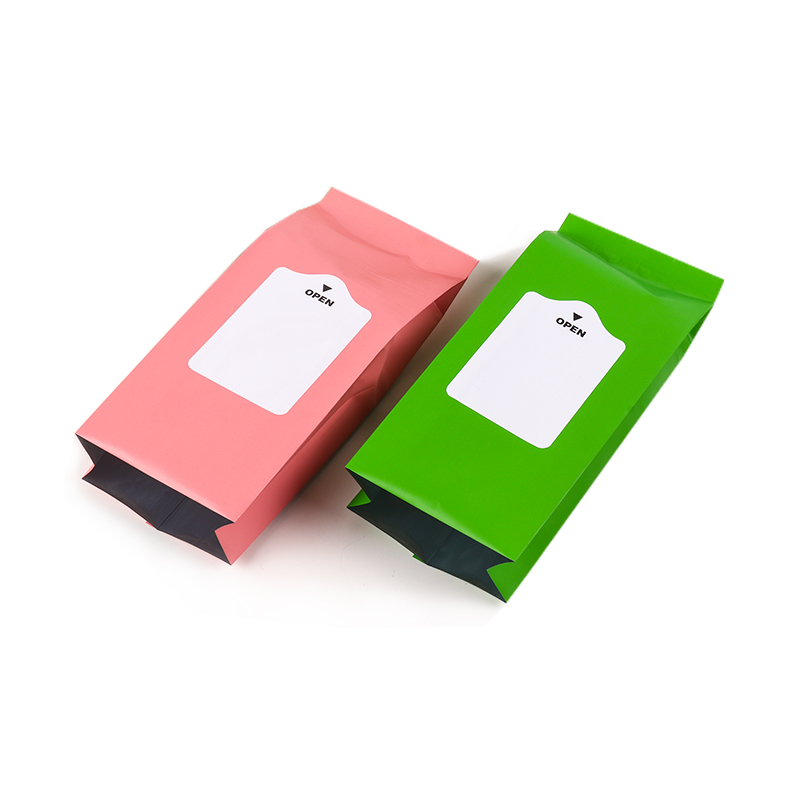
A wet wipes packaging bag has a narrower job than most flexible packaging. It doesn't need to protect against crushing like a chip bag, or block light like a coffee pouch. Its main task is keeping moisture locked inside from the moment it's sealed until the last wipe gets pulled out, however long that takes.
That sounds simple. It isn't, really. Moisture wants to escape through any gap, however small — a poorly sealed edge, a sticker that doesn't quite adhere flat, a zipper strip that loses tackiness after repeated opening. Any one of these turns a sealed pack into a slowly drying one.
Like most flexible packaging, a wet wipes bag isn't a single material. It's layered, usually combining:
Skip or thin out that barrier layer, and no amount of clever printing or sticker design saves the bag from moisture loss. Buyers comparing suppliers sometimes focus on print quality first, when the barrier layer is really where the functional difference lives.
Most wet wipes packs today use one of a few closure types:
| Closure Type | How It Works | Common Trade-Off |
| Adhesive sticker | Peel-and-stick flap over the opening | Loses stickiness after repeated use |
| Plastic snap lid | Rigid cap fitted to a flexible bag opening | Adds cost, more complex assembly |
| Zipper strip | Press-seal track built into the bag | Can wear out with heavy daily use |
None of these is flawless, and each comes with its own failure pattern. A sticker that's applied slightly off-center, for instance, won't seal flush no matter how good the adhesive is. This is one of those details that seems minor during design but shows up fast in customer complaints once a batch ships.
Wet wipes packaging comes in a range of formats — flat pouches, stand-up bags, canister-style tubs, and travel-size flip-top packs. Each format changes how the bag needs to be constructed. A stand-up pouch needs a stronger base seal to stay upright and hold shape when nearly empty. A flip-top pack needs a rigid enough opening that repeated flipping doesn't wear down the hinge point.
Buyers ordering across multiple formats sometimes assume the same bag construction works everywhere. It usually doesn't. A seal strong enough for a flat travel pouch might not hold up the same way once scaled into a larger stand-up format carrying more wipes and more weight.
Two wet wipes packaging bags can look nearly identical sitting on a shelf, priced within a small margin of each other, and still perform very differently a few weeks later. The difference almost always traces back to that barrier layer and how carefully the seal was applied and tested. Buyers who ask suppliers directly about barrier material and seal testing tend to avoid the slow, disappointing surprise of opening a pack to find the first few wipes already dried out.
Recommended Products
CONTACT US
Add: Rooms 101 and 102, Building 16, Longcheng Micro-Entrepreneurship Park, Longgang City, Wenzhou City, Zhejiang Province, China
TEL: +86-13395775085
E-mail: [email protected] / [email protected]
KEEP In Touch


 English
 русский
 Español